
Anti-Bully
Project Type
UX UI | UX Research | Design App
ANTI-BULLY was developed during a 15-hour Hackathon in collaboration with IAC College, focusing on the dangers of AI online.
Our team (winning team) chose to tackle the issue of cyberbullying among children, researching how harmful messages can be identified and prevented in real time.

About Anti-Bully
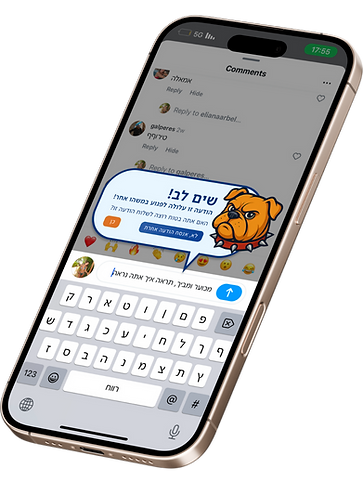
ANTI-BULLY is a shared parent–child application that alerts children while they type potentially hurtful messages and gives parents a general behavioral overview- without exposing private conversations. Inspired by an anti-virus system, it works quietly in the background and activates only when it detects a harmful message, triggering a gentle pop-up warning.
ANTI-BULLY promotes healthier communication and positive digital habits.
Problem
With the rapid growth of technology and online platforms, harmful and offensive communication has become increasingly common among children and teens. The accessibility and anonymity of digital spaces often lead to impulsive messages that cross boundaries and damage emotional well-being.
Need
There is a strong need to create a respectful, safe, and supportive online environment for kids and teens. A system that can guide them in real time- helping them recognize when their words may hurt someone and encouraging them to choose kinder, more responsible communication.
Solution
ANTI-BULLY provides real-time guidance by alerting users before they send a harmful message, giving them a moment to pause, rethink, and avoid causing emotional harm. It is the first app of its kind designed to prevent harmful communication, support healthier online behavior, and empower children and teens to develop better digital habits.
5W
1
What?
Preventing harmful communication among children online and creating a pleasant and educational environment.
Children and teens.
2
Who?
3
When?
On a daily basis.
4
While using social networks.
Where?
5
Why?
The rise of violent behavior among children and teens, and the prevention of negative outcomes such as isolation and emotional distress.
Market Competitors

Advantages
Accurate data and extensive statistics on violent discourse patterns- can be used to identify problem areas in networks and communities (useful for educational institutions or
large organizations).
Disadvantages
Treats the problem only after it occurs.
It has no educational component or personal dialogue with the child- it is a monitoring tool, not a behavior change tool.


Advantages
Extensive control and monitoring for the parent-viewing location, messages, and problematic content in real time. Protects the child from dangerous content, not just bullying.
Disadvantages
Focuses on monitoring and supervision, not on prevention or education- the child is passive in the process. Feeling of invasion of privacy and lack of trust between the parent and the child.
Interviews
Mother of a teenager
Michal Levy, 47
1. How do you monitor your child’s activity on social media?
I try to follow everything he does, but it’s not always easy. I try asking him, but as he gets older, he hides more.
2. Do you think your child is aware that some of his actions might hurt others? Or alternatively, do you think that if someone hurts him, he would tell you?
Sometimes it seems he doesn’t understand the meaning of what he writes.
3. Would you like a system that provides a warning before sending a harmful message?
Yes, it could be a great tool that helps him think before he sends something.
4. Do you think punishments should be part of the process?
I think it would help him understand, but we also need to be careful not to overdo it. In any case, I would like to be aware of the whole process.
5. How would you feel if you received a notification when your child sent a
harmful message?
It would help me know if there is a problem so
I can intervene in time.
6. Do you feel you need more tools to understand your child’s behavior online? If so, how do you think he would react to you monitoring him?
Yes, it could help me be more involved and understand what is happening. It might be difficult for him at first, but I think it’s important for me to know.
7. What do you think could help your child cope better with cyberbullying?
Much more education about how to behave online and how to deal with harm.
8. How would you like the system to help you be a better parent in terms of monitoring your child’s activity?
It’s important for me to have a way to know if he is hurting others or being hurt, and to have the ability to help him cope.
Child Facing Online Bullying Shalio Wasserman, 14
1. How do you feel when someone sends you hurtful messages online?
It hurts and makes me feel bad, and I don’t know how to respond to it.
2. When was the last time someone wrote something that hurt you?
It was two weeks ago. Someone wrote something about how I look.
3. How do you usually react to messages
like that?
I freeze up or try to ignore it,
but it’s hard for me.
4. Have you ever felt like you didn’t
have support when something like
this happened?
Sometimes I feel like I have no one to turn to, because not everyone understands me.
5. Would you like something that could
stop these hurtful messages before
they happen?
Yes, it would help if the kids sending the messages would think twice before sending and understand there’s a real person on the
other side.
6. What do you think could help prevent these messages from being sent?
I would like there to be some kind of punishment for whoever sent the message so they understand it’s not okay. Or that their parents or teacher would be told.
7. How would you like the system to help
you avoid being hurt and also avoid
hurting others?
It’s important that there’s something that prevents it ahead of time, not only after it
already happened.
Child Who Bullied Online
Gal Kalderon, 16
1. Have you ever sent a message that was not very nice?
Maybe by accident, or as a joke.
2. Do you understand how the messages you send might affect others?
I don’t always think about it, but I know it
can hurt.
3. Would you want to know if your message might hurt someone before you send it?
I think so, but not if it’s going to be
too annoying.
4. Would you see this as a punishment or just a tool to help you be more aware?
I think it could be more of a tool to help me think about what I write, but only if it’s not
too bothersome.
5. How would you feel if there were punishments for sending
harmful messages?
Not good at all. I hate punishments. I would think twice about whether it’s really worth the punishment.
6. Would you want to know if your parents could monitor your online activity?
I really wouldn’t want my parents to monitor the messages I write- it’s private.
7. Do you think harmful behavior online should stop, or should it be handled differently?
It needs to be dealt with, maybe with more warnings and not punishments.
8.How do you think we can prevent cyberbullying without relying on
strict punishments?
I should be given a chance to fix things before being punished right away. If I knew my words would reach my parents, I might think twice before sending them.
Personas


Wire Flow


About The App
The system includes two connected apps with different interfaces for parent and child.
Only the parent can install or remove the child’s app.
Choose Your Role
Parent App
The parent app provides a general overview of the child’s online behavior without exposing any private content. It allows parents to track positive trends or concerning patterns and stay involved in
a supportive, non-intrusive way.

Connecting a child
app using a barcode

Parent homepage
showing all children

Detailed child report

Child App
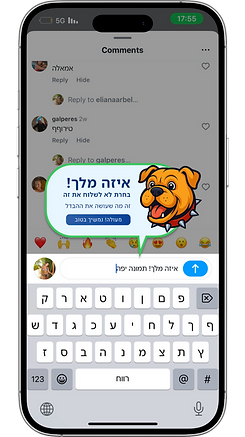
The child app offers real-time guidance while typing. When a message becomes harmful, the dog character appears with a warning and encourages kinder communication, helping the child rethink their words before sending.
A child's homepage
Real-Time Warning System
The app runs in the background like an antivirus and activates the moment it detects the child is about to send a harmful message.

First warning

Second warning

Third warning

Fourth warning

Fifth warning and blocking
positive reinforcement


